Tag: life

  • The Art of Sauntering

    Sauntering—walking at an unhurried, leisurely pace—is a practice as old as humanity itself. Across centuries, people have wandered through city streets, mountain trails, and village lanes not merely to arrive somewhere, but to encounter the world more deeply. To saunter is to resist haste; it is to walk not with urgency, but with presence.

    In today’s relentlessly fast-paced world, where our attention is constantly fractured by pings, screens, and schedules, sauntering offers a rare antidote: stillness in motion. A slow walk invites us to notice what speed conceals—the smell of freshly cut grass, the shifting pattern of light through leaves, the unremarkable yet miraculous sound of birdsong. To saunter is to practice mindfulness with our feet, to move while being fully present, reducing stress and grounding ourselves in the moment.

    More than presence, sauntering teaches us to value the journey itself. Unlike the commuter or the hiker, the saunterer is not rushing to reach point B. Freed from the tyranny of efficiency, we can wander down side streets, linger over details, and stumble into small wonders—a mural we’ve never seen, a hidden café, a hawk tracing circles in the sky. In these detours, inspiration and joy emerge, reminding us that discovery often belongs to those who move slowly enough to notice.

    There are physical rewards as well. Science has long shown that walking, especially in nature, lowers stress hormones, lifts mood, and sharpens cognition. A saunter is not exercise in the traditional sense—it is lighter, gentler—but its effects on body and mind can be profound, precisely because it couples movement with appreciation.

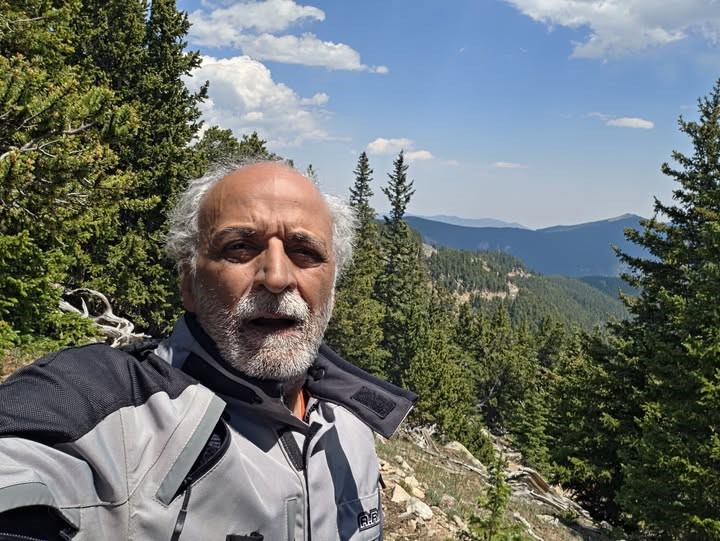
    The naturalist John Muir once explained the word’s medieval origins. Pilgrims bound for the Holy Land would reply, when asked their destination, “à la sainte terre”—to the Holy Land. Over time, they came to be known as sainte-terre-ers, or “saunterers.” For Muir, the mountains were themselves a holy land, worthy not of conquest or haste but reverence. We ought to saunter through them, he insisted—not merely hike.

    This spirit of reverence is what makes sauntering more than a pastime. It is a philosophy of attention. To walk slowly, without urgency, is to affirm that the world is not simply something to pass through but something to dwell in.

    In the end, sauntering is less about where we go than how we go. It slows us down, draws us deeper into our surroundings, and reconnects us with both nature and ourselves. Whether wandering a familiar park or a foreign city, each slow step can become an act of pilgrimage—an opportunity to pause, breathe, and remember that the journey itself is the destination.

  • What are you going to do?

    We are perpetually confronted with the question: “What are you going to do?”—a query that confines the essence of human worth to the realm of action and achievement. It is a question steeped in societal paradigms, one that assumes identity is forged through the mechanics of productivity, the pursuit of milestones, and the acquisition of accolades. Yet, beneath its seemingly innocuous surface lies a reductive view of existence, one that fails to consider the far more profound question: “What are you going to be?”

    This distinction, though subtle, is transformative. It demands a reexamination of how we perceive identity—not as a mere sum of tasks, titles, or external validations, but as an intricate interplay of values, attributes, and inner character. It compels us to recalibrate our definitions of success, shifting from a fixation on doing—on material and professional benchmarks—to a focus on the essence of being.

    To “be” is to embrace a deeper narrative of identity, one that transcends transient roles and accomplishments. It invites us to consider the qualities that truly define a person: their attitude, their compassion, the way they treat others, and the inherent beauty that lies in their uniqueness. You may be a brilliant engineer or a celebrated researcher, but before these labels, you are kind, intelligent, and deeply connected to your family. It is these intrinsic elements that form the foundation of your humanity, qualities that cannot be reduced to metrics or milestones.

    When you begin to view yourself and others through this lens, you unlock the potential for a more meaningful existence. You establish the groundwork for answering not just what you will achieve, but who you will become. This shift in perspective challenges us to ask a larger, more enduring question: Are we leaving the world better than we found it for those who will come after us?

    Roles, by their nature, are ephemeral. Careers evolve, relationships shift, and societal expectations change. But the essence of who you are—your capacity for kindness, curiosity, and integrity—transcends these fluctuations. You may excel as an engineer, but your true value lies in your ability to approach problems with insight and creativity. You may dedicate your life to social work, but it is your compassion as a member of your community that will leave a lasting impact. Regardless of what you do, there is always the opportunity to become the person you aspire to be, the person rooted in values rather than tasks.

    Choosing a positive attitude, practicing authentic kindness, and embracing your singular beauty are not merely personal acts—they are transformative principles. By internalizing these ideals, life becomes richer, not in material wealth but in depth and meaning. You begin to perceive yourself and the world beyond the superficial constraints of societal labels, those reductive markers that emphasize doing while neglecting the essence of being.

    The shift from doing to being is monumental. It is not simply a philosophical nuance but a radical invitation to reconsider the foundations of identity. It asks us to move beyond the checklist of accomplishments and to explore the core of who we are, the values we embody, and the presence we bring to each moment. It highlights the timeless dichotomy between the human doing and the human being—one tethered to perpetual action, the other anchored in conscious existence.

    When we declare, “I want to be an athlete” or “I want to be a researcher,” we often conflate being with doing. What we truly mean is the external expression of those roles—the training, the competition, the experiments, the publications. But the heart of the matter lies deeper: how we embody those identities. Are they pursued with integrity, curiosity, humility, and purpose? Do they reflect the values that define us, or do they merely serve as hollow achievements?

    To be is to ground yourself in authenticity, presence, and intentionality. It is about asking fundamental questions:

    • How will I show up—not just in my achievements, but in my interactions and relationships?
    • What kind of person will I become, irrespective of accolades or external recognition?
    • Do my actions flow naturally from the values that define me, or am I defined solely by my actions?

    Society, in its relentless glorification of doing, often equates worth with busyness, productivity, and the tangible metrics of success. Yet, in the ceaseless pursuit of these ideals, we risk losing the essence of being. A meaningful life, however, requires a delicate balance—a recognition that what we do must emerge as an extension of who we are.

    So, the next time someone asks, “What are you going to do?” resist the urge to provide a rehearsed answer tied to goals or roles. Instead, pause and consider the deeper, more enduring question: “What are you going to be?”